
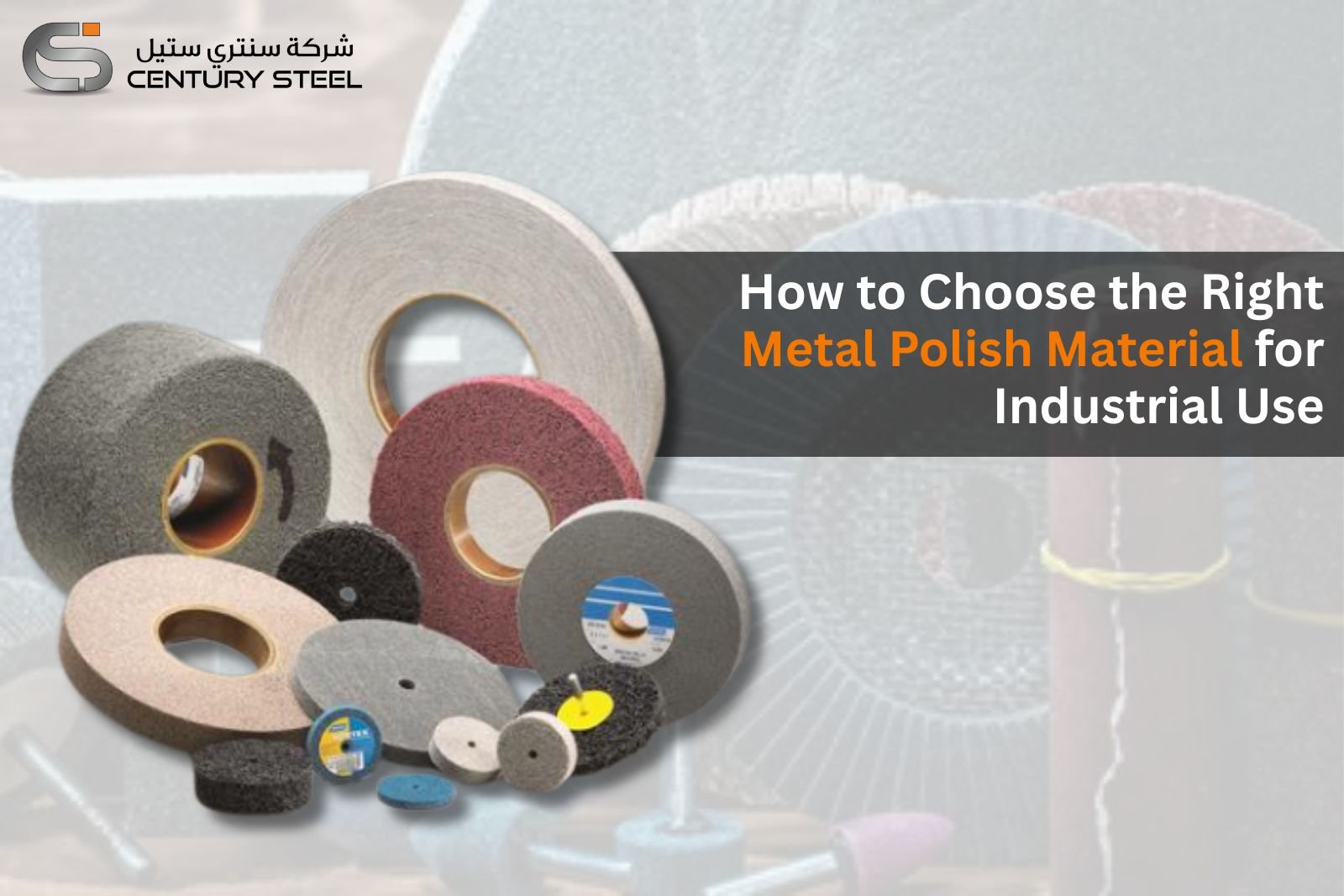
Metal polishing may seem like a small step in the industrial workflow, but it plays a huge role in determining the durability, appearance, and performance of metal components. Whether you’re working with stainless steel, aluminum, brass, or mixed metal surfaces, choosing the correct metal polish material is essential for achieving smooth finishing and long-term protection. The right polishing compound not only enhances surface quality but also prevents corrosion, improves operational efficiency, and reduces maintenance costs.
In this guide, we’ll break down everything you need to know about selecting the right metal polish material for industrial applications, along with why Century Steel in Kuwait is a trusted supplier for quality polishing products.
Why Choosing the Right Metal Polish Matters
Using the wrong polishing material can lead to surface scratches, uneven texture, and even permanent damage. For example, stainless steel requires different polishing compounds than aluminum or brass because each metal reacts differently to abrasives and chemicals.
Here’s why the right choice matters:
- Improved durability: Proper polishing prevents corrosion and strengthens the surface.
- Better aesthetics: Smooth and shiny finishes help improve product quality.
- Cost efficiency: Reduces the need for repeated polishing or replacement.
- Enhanced performance: Well-polished parts perform better in demanding industrial environments.
Choosing wisely means ensuring long-lasting results and fewer maintenance issues.
Explore our full range of premium metal products and solutions ? Century Steel Brochure
Types of Metal Polish Materials Used in Industries
Industrial metal polishing compounds come in several forms, each designed for a specific purpose:
1. Abrasive Polishing Compounds
These include compounds with varying grit levels that remove deep scratches, welding marks, and heavy oxidation.
2. Chemical Polishes
Best for removing stains, rust spots, or tarnish without aggressive abrasion.
3. Buffing Compounds
Used with polishing wheels to create smooth, mirror-like finishes on metals.
4. Liquid and Cream Polishes
Ideal for light polishing and enhancing shine on smoother surfaces.
5. High-Performance Industrial Compounds
Formulated for heavy-duty applications where durability and speed are essential.
Choosing the right type depends on the condition of the metal and the required finish quality.
Metal-Specific Polishing Materials
Different metals require different polishing compounds because their hardness, oxidation levels, and chemical properties vary.
-
Stainless Steel
Needs non-corrosive, heat-resistant polishing compounds that prevent streaking and discoloration.
-
Aluminum
Soft metal that requires milder abrasives to avoid scratches while still removing oxidation.
-
Brass and Copper
Often polished to restore shine; best handled with gentle, tarnish-removing compounds.
-
Carbon Steel and Iron
Usually require abrasive polishing compounds to remove rust, welding marks, and surface imperfections.
Selecting metal-specific polish ensures safe and effective finishing without damaging the surface.
Understanding Abrasive Grades
Abrasive grade, or grit level, is one of the most crucial factors in selecting metal polish materials. Coarse abrasives are used for heavy-duty work, while finer grades are used for finishing.
- Coarse (60–180 grit): Removes deep scratches and weld marks.
- Medium (220–400 grit): Smooths surface irregularities.
- Fine (600–1200 grit): Ideal for producing a smooth, polished base.
- Ultra-fine (1500+ grit): Used for mirror finishing and final polishing.
Understanding abrasive grades helps you match the material to the required level of finish.
Factors to Consider Before Choosing Metal Polish
Before selecting a metal polish, keep these factors in mind:
- Type of metal and its natural hardness
- Surface condition (corrosion, scratches, oxidation level)
- Desired finish (matte, satin, glossy, mirror)
- Application method (manual vs. machine polishing)
- Work environment and safety requirements
- Chemical composition of the polish
- Industry compliance and standards
Different industries also have specific finishing requirements—what works for fabrication workshops may differ from HVAC or marine applications.
Industrial Applications of Metal Polish
Metal polish materials are widely used across multiple industrial sectors:
- Fabrication workshops – for smoothing welds and preparing surfaces
- Manufacturing units – achieving consistent quality finishes
- Automotive and marine – removing oxidation, rust, and stains
- HVAC and piping – maintaining corrosion-free surfaces
- Construction industry – enhancing architectural metal elements
- Machinery maintenance – ensuring longevity and smooth operation
Each application requires a unique approach and polishing material depending on the metal type and usage conditions.
Best Practices for Industrial Metal Polishing
To get the best results from metal polishing:
- Always clean the surface before polishing.
- Start with a coarse abrasive if the surface has deep scratches.
- Gradually move to finer grit for smooth finishing.
- Use proper buffing tools for consistent results.
- Avoid applying excessive pressure to prevent burn marks.
- Follow safety guidelines, especially when using chemical polishes.
Consistent technique and the right material ensure professional-quality finishes.
Why Choose Century Steel in Kuwait for Metal Polishing Materials
Century Steel in Kuwait offers a reliable range of high-quality metal polishing materials suited for industrial use. Whether you need abrasive compounds, stainless steel polish, or multi-metal polishing solutions, Century Steel provides products that ensure durability, superior finishing, and excellent performance.
With industry expertise and a strong reputation in Kuwait’s steel and metal sector, Century Steel supports businesses with materials that meet international standards and deliver consistent results.
Conclusion
Choosing the right metal polish material is essential for achieving high-quality finishing, improving durability, and maintaining the long-term performance of metal components. By understanding abrasive grades, metal-specific requirements, and polishing techniques, industries can ensure effective results every time. With trusted suppliers like Century Steel in Kuwait, getting the right polishing material is easier, faster, and more reliable.
Contact us today to get expert assistance and the best metal polishing solutions for your industrial needs.
